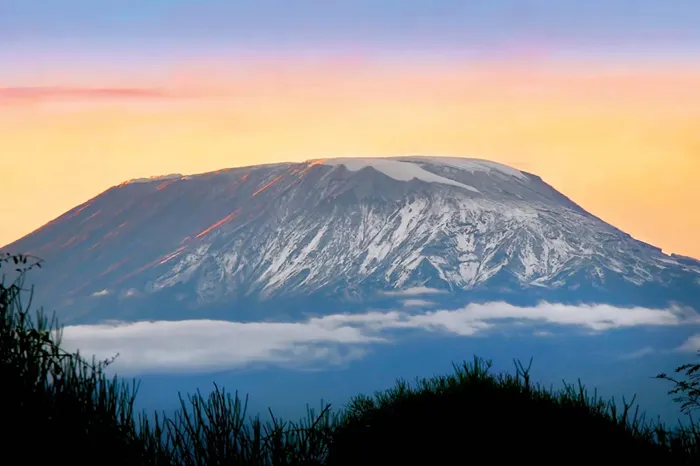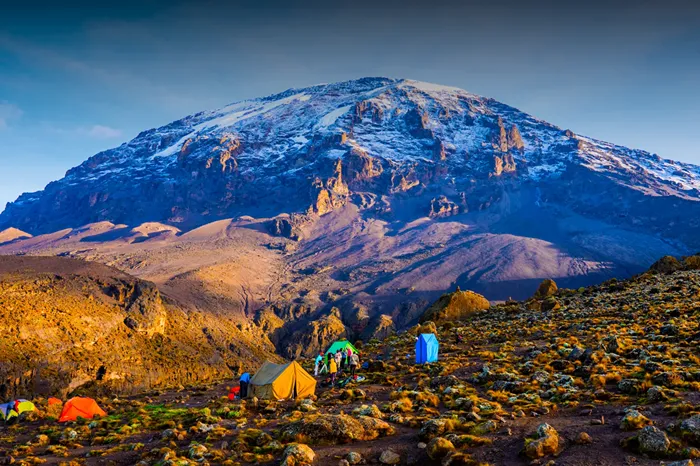
The Northern Circuit is the newest and longest route on Mount Kilimanjaro—and one of the most rewarding. Offered exclusively by select operators, this incredible 8–9 day adventure allows you to circle the mountain from all four sides, offering unmatched panoramic views, a gentle pace for excellent acclimatization, and the rare chance to experience the mountain without crowds.
At Safari horizons, we recommend the Northern Circuit to those seeking both beauty and serenity. As you journey through lush rainforests, surreal alpine deserts, and vast volcanic landscapes, you’ll enjoy breathtaking vistas of the African plains and south Kenyan valleys. By night, sleep under a blanket of stars—by day, hike through otherworldly high-altitude zones few ever see.
This route offers one of the highest summit success rates on Kilimanjaro, and for the truly adventurous, we can even arrange an overnight stay in the Crater—an unforgettable experience only a lucky few achieve.
Let Safari horizons guide you through the most exclusive, scenic, and peaceful route to the Roof of Africa.
Arusha
Arusha
All ground transfers
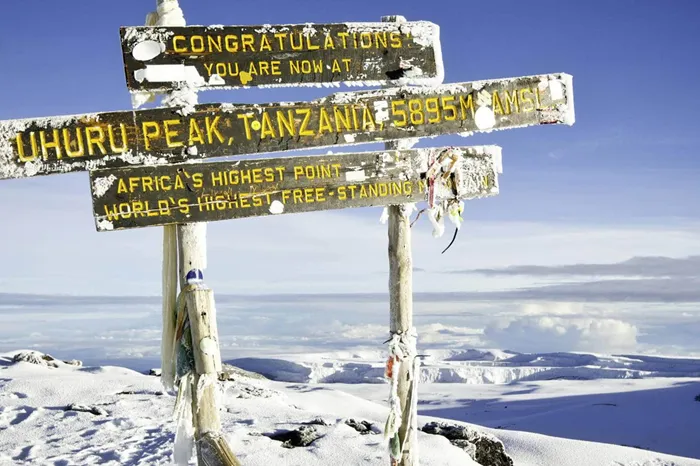
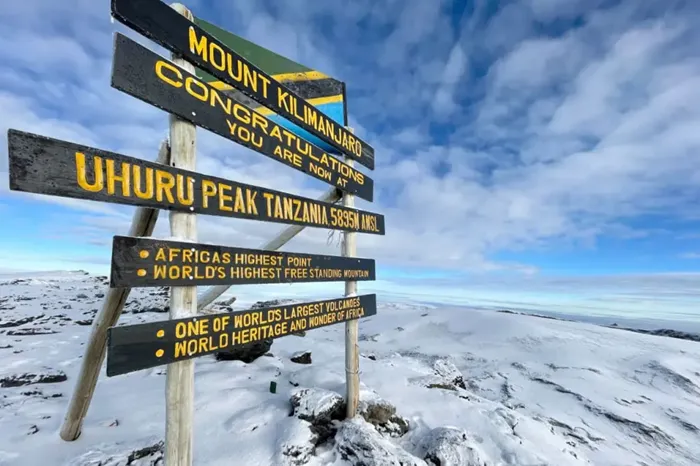
5895 Meaters
All listed meals
Camping
English, French & Spanish
June to October & December to March
Minimum 2 people
Private Camping & Midrange
80
13
Upon arrival at Kilimanjaro International Airport (JRO) or Arusha Airport (ARK), a friendly staff member from Safari horizons will be there to welcome you. You will then be transferred to your hotel in Arusha, where you can relax after your journey. In the evening, you will have a safari briefing, where our team will go over your itinerary, answer any questions, and ensure you are well-prepared for your adventure. Get a good night’s rest—your unforgettable safari begins tomorrow
Accommodation
In the morning, your guide and climbing support team will meet you at your hotel for a final briefing. Then you will drive for approximately 3-4 hrs to Kilimanjaro National Park's western entrance, Londorossi Gate (2,250 m / 7,380 f).
After the quick formality of acquiring climbing permits and registering with the search and rescue service, your group will continue in vehicles to the drop-off point (3,414 m / 11,200 f). Here you will see stunning views of the Shira Plateau for the first time.
The route from your drop-off point to your first high-altitude camp (Shira 1) features a small gain in altitude and is not very physically challenging. Thanks to this, you will be able to begin the process of acclimatization properly. By the time you reach the camp, the climbing team will have prepared everything needed for you to have a relaxing evening; the tents will be pitched, chairs set up, refreshments and a full dinner will be waiting for you.
PLEASE NOTE: This will be your first day at this altitude, so it is strongly recommended you heed the following instructions from this point on:
At night you may experience discomfort associated with acclimatization to the high altitude: because of a reduction in your breathing pattern at night, your body gets less oxygen than during the day. Taking altitude into account, you may therefore start feeling sick and experience a headache. Pay attention to your own body and tell your guide if you start feeling any symptoms of altitude sickness.
Trekking time:
1 hour
Distance:
4 km (2.4 miles)
This day brings yet another modest altitude gain of 240 m / 787 f as you trek from Shira 1 Camp to Shira 2 Camp. The low physical demands of the trek will leave you with both time and energy to enjoy Kilimanjaro's incredible views, magnificent flora endemic to the mountain, and, if the weather is favorable, views of Mount Meru, which is the 5th highest mountain on the continent.
PLEASE NOTE: After lunch, you will enjoy a 2-hour rest. Then you are encouraged to take an acclimatization hike toward Lava Tower, which allows you to gain another 260 meters (853 feet) in altitude, helping you to further adjust to the elevation gain.
Acclimatization hike:
Change in Elevation:
Shira 2 Camp (3,850 m / 12,631 ft)
Destination point en route to Lava Tower (4,110 m / 13,484 ft)
Hiking distance:
2 km (1.2 miles)
Hiking time:
1–2 hours
Trekking time:
3–4 hours
Distance:
7 km (4.3 miles)
After breakfast, your group will depart Shira 2 Camp (3,850 m / 12,628 f) and hike to Lava Tower (4,600 m / 15,088 f).
This route offers a challenge for climbers, and many find this day more physically difficult than previous days. Therefore, your team will enjoy a lunch break at Lava Tower.
After lunch and a rest, your group will climb slightly higher and then descend to Moir Hut Camp.
Trekking time:
5–7 hours
Distance:
14 km (8.7 miles)
On this day you will have a rather long, but easy trek. Climbing out of Moir Valley (where you camped for the night) is a steep, but short climb, and then the rest of the day you will hike around the northern slope of Kilimanjaro. Most of the day will have up-hill and down-hill climbs, but there are no steep altitude gains.
This route passes close to the border with Kenya, so you will be treated to amazing views of the Tsavo and Amboseli valleys.
Trekking time:
5–7 hours
Distance:
12 km (7.4 miles)
You will finish trekking up the northern slope of Kilimanjaro and stop for the night in 3rd Cave Camp, where the route will meet up with the classic Rongai route. On this day, trekking is shorter than on the day before, and by this time your body should have already become completely acclimated to the altitude of 3,800 m / 12,464 f, which will contribute to your general well-being.
Trekking time:
4–6 hours
Distance:
8 km (4.9 miles)
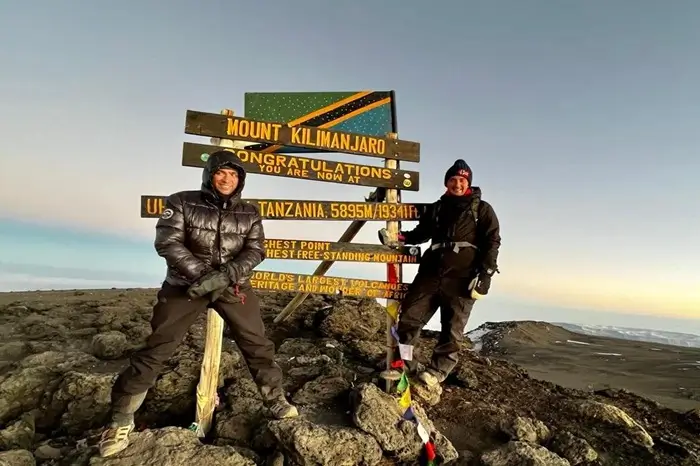
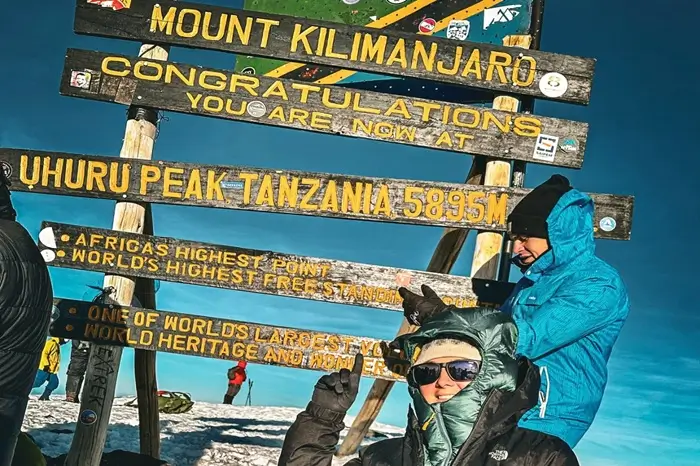
On this day you will be trekking to the School Hut Summit Camp (4,800 m / 15,744 f). The trekking itself is not very hard, but it is good to remember to choose an appropriate pace in order to keep your strength up for the final push to Kilimanjaro's summit. When you reach the camp, we recommend you sleep early, avoid strenuous activity, and drink as much water as you can. This night you will be waking in the dark and completing the final trek up to Uhuru Peak (5,895 m / 19,336 f) for the climax of your adventure on Kilimanjaro.
Trekking time:
4–5 hours
Distance:
5 km (3.1 miles)
On the summit night, your safety is our number-one concern; therefore, we will assign one guide for every two climbers. The responsibility of a guide is to watch the climber's health as they summit Uhuru Peak (5,895 m / 19,336 f). The climb starts at School Hut Summit Camp (4,800 m / 15,744 f) around midnight. Technically, it is an easy climb, but because of the high altitude, it will feel more strenuous.
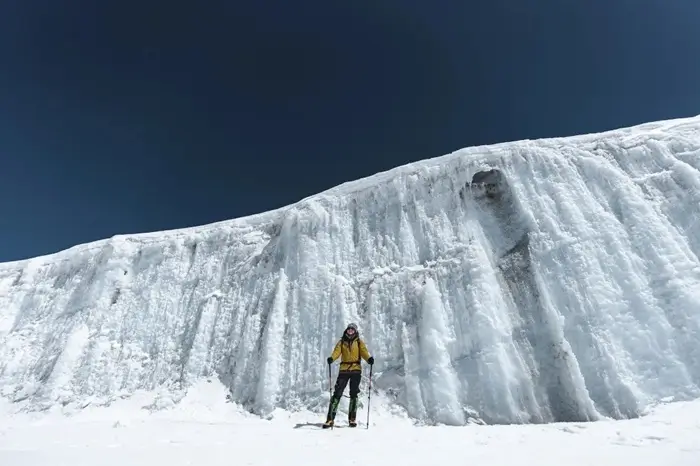
Upon successful summiting, you can walk to the nearest glaciers. The group then descends to Barafu Camp for a two-hour lunch and rest break. You will then continue to descend to Millenium Camp (3,950 m / 12,956 f) where you will spend the night.
PLEASE NOTE: Please keep in mind that 9/10 accidents occur during descent. Mind your step to avoid potential falls, injuries, and damaged toes.
Trekking time:
10–13 hours
Distance:
16 km (9.9 miles)
Millennium Camp sits amidst a tropical rainforest. The lower altitude and feelings of accomplishment from having reached the summit make for a good night’s rest. Hot breakfast is followed by your final descent to the park’s exit gate: Mweka Gate (1,640 m / 5,379 f). This is the final stop before you are taken to our office to receive your summit certificates. It also provides a good opportunity to recap the adventure with your support team and take a final team photo. Finally, you will be taken to your hotel for a well-deserved rest.
Trekking time:
4–5 hours
Distance:
12 km (7.4 miles)
Accommodation
Rest in the hotel and transfer to the airport.
PLEASE NOTE: Hotel check-out is at 10:00 AM. In case you need a late check-out because of an evening flight, there is the option to extend your hotel stay for an extra fee.
Standard itineraries span 7–9 days on the mountain, with the preferred 8‑day schedule offering optimal acclimatization
It’s rated moderately difficult: you’ll cover ~12 km/day at high altitude and tackle steep scree on summit night. Prior multi‑day hiking and gym prep are strongly advised
The eight‑day Lemosho Route boasts ~85–90% success, thanks to its gradual ascent profile
January–March and June–October are the driest, most stable months; peak season (July–September) sees larger crowds but very reliable weather
Key items: three–season sleeping bag, waterproof trekking boots, layered clothing (base‑mid‑insulation‑shell), warm hat/gloves, trekking poles, headlamp and sun protection
Each group is backed by English‑speaking guides, cooks and porters (1 guide:4 clients; 1 porter per 15 kg of your luggage) who set up camps, prepare meals and carry gear