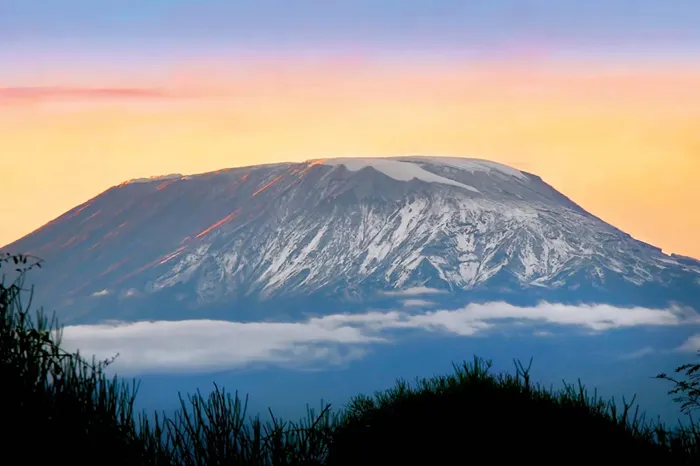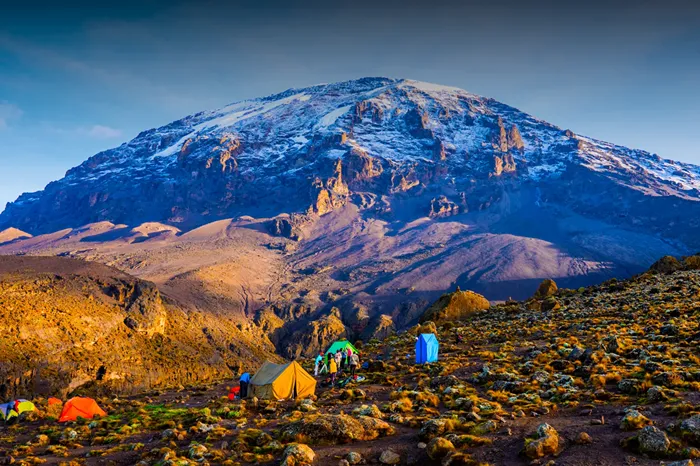
The Rongai Route, though less traversed than the southern paths, delivers a truly distinctive Kilimanjaro climb from the moment you set foot in the mist‑shrouded coniferous forests of the mountain’s northern slope. This northern approach guides you through ever‑changing climate zones—lush montane woodland, open heather moorlands, and the stark, high‑altitude desert—before you descend via the classic Marangu trail on Kilimanjaro’s southwestern face.
Arusha
Arusha
All ground transfers
5895 Meaters
All listed meals
Camping
English, French & Spanish
June to October & December to March
Minimum 2 people
Private Camping & Midrange
80
13
A guide and a mountain support crew will arrive at your hotel in the morning in order to meet you and hold a quick briefing, after which you will travel by vehicle to Kilimanjaro National Park's northern entrance: Nalemuru Gate (2,020 m / 6,627 f). After the quick formality of acquiring climbing permits and registering with the search and rescue service, the group will start trekking up to Simba Camp (2,671 m / 8,761 f). Your trek this day will be moderate and take you through the coniferous forest up Kilimanjaro's northern slope. Remember not to hurry and always keep a comfortable pace. By the time you reach the camp, our professional mountain crew will have prepared everything necessary, put up tents, and begun preparing dinner.
This will be your first day at this altitude, so it is strongly recommended you heed the following instructions from this point on:
It is not uncommon to experience discomfort during the night; high altitude has this effect on the human body. Nausea and headaches are common occurrences in the mountains. However, make sure you alert your guide if you feel any symptoms of altitude sickness.
Trekking time:
3–4 hours
Distance:
8 km (4.9 miles)
This day starts with an early breakfast and then departure from Simba Camp to the second high-altitude camp: Kikelewa Camp (3,630 m / 11,906 f). From Kikelewa Camp you can see Kibo Volcano at its finest, if the weather is clear. This trek is more physically demanding than the previous one, so once you have reached the camp, we recommend getting some rest.
Trekking time:
5–6 hours
Distance:
10 km (6.2 miles)
This day starts with another early breakfast and then a trek to Mawenzi Tarn Camp, which is situated at the foot of Mawenzi Volcano, Kilimanjaro's second-highest point. When you reach the camp, you will have lunch and a two-hour rest, after which there will be an acclimatization hike towards Mawenzi Volcano with a 200 m / 656 f gain in altitude. After, you will hike back down to Mawenzi Tarn Camp, where you will have dinner in the evening.
The acclimatization hike is an easy trek with a slight gain in altitude done in order to speed up the acclimatization process. You should take the acclimatization hikes very seriously. They help increase your chances of successfully summiting Kilimanjaro and save you from the consequences of altitude sickness.
Acclimatization hike:
Change in Elevation:
Mawenzi Tarn Camp (4,315 m / 14,156 ft)
Mawenzi Volcano (4,510 m / 14,796 ft)
Hiking distance:
2 km (1.2 miles)
Hiking time:
1–2 hours
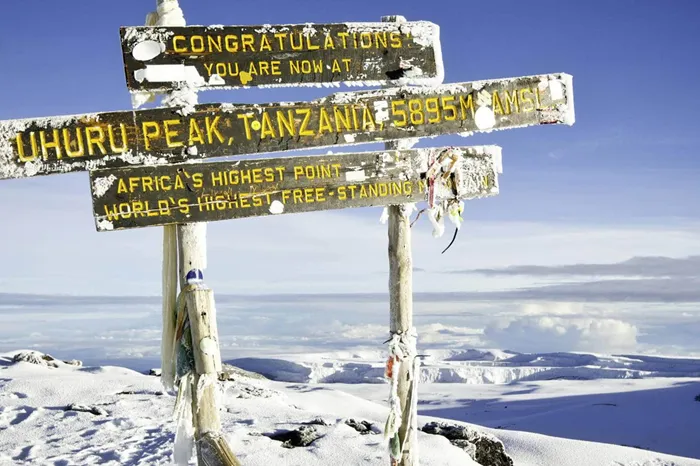
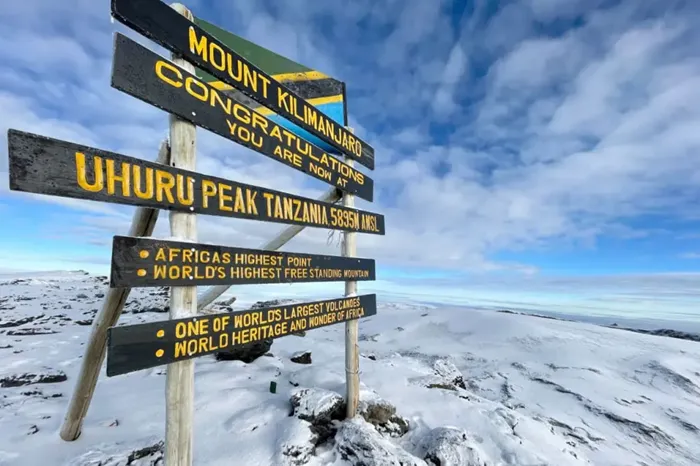
This day will be spent trekking towards Kibo Hut Camp (4,720 m / 15,482 f). The landscape will change significantly to become a rocky semi-desert. The actual trek is not very difficult, just remember to stick with an appropriate pace to keep up your strength for the trekking to Kilimanjaro's summit. When you reach the camp, we recommend you sleep well, avoid strenuous activity, and drink as much as you can, because that very night you will be ascending Uhuru Peak (5,895 m / 19,336 f).
Trekking time:
5–6 hours
Distance:
9 km (5.5 miles)
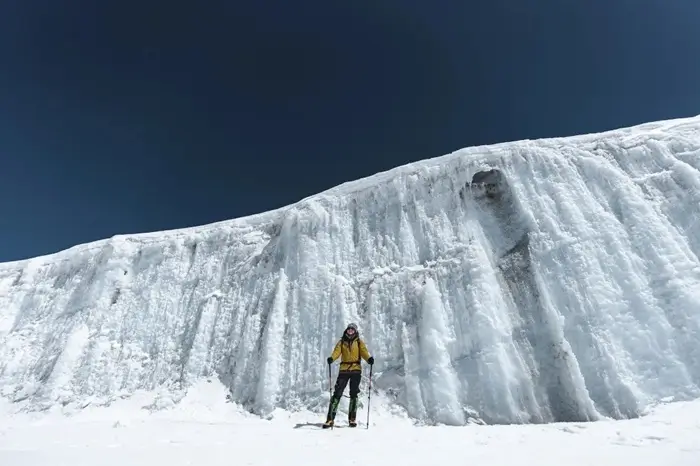
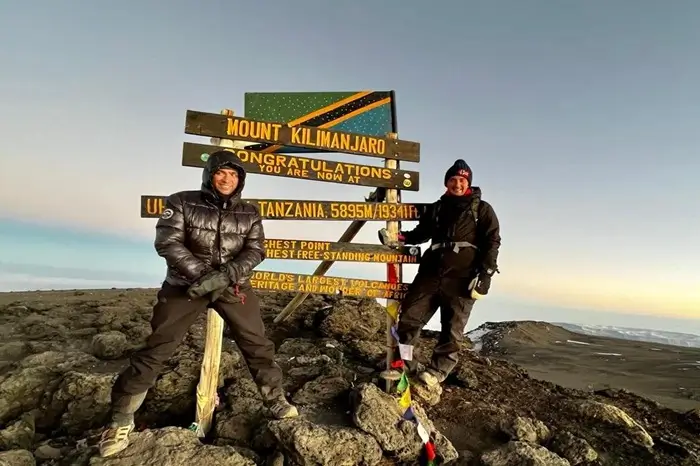
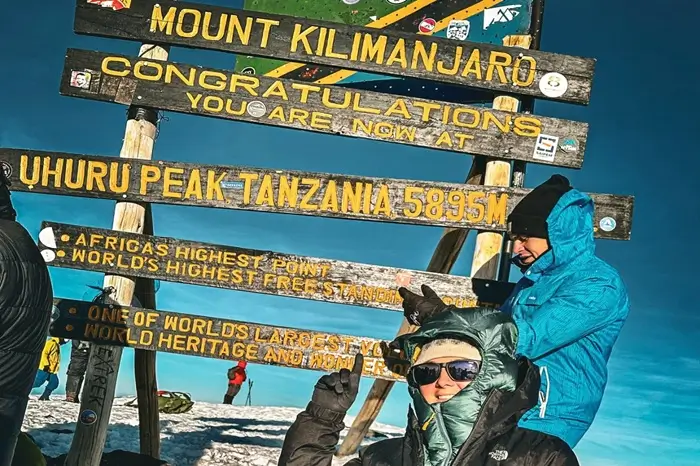
Your group will depart at night from Kibo Hut Camp (4,720 m / 15,482 f) and head toward Kilimanjaro's summit: Uhuru Peak (5,895 m / 19,336 f). Technically speaking, the trek is not difficult, however, at this high altitude, even regular physical activity can feel strenuous. Therefore, for the final summit climb, climbers are paired in twos and put under the care of a personal guide, who will closely monitor their physical well-being. After your successful ascent to Uhuru Peak, you can descend to the nearest glacier, if desired. Then you will return to Kibo Camp and after a two-hour rest continue your descent to Horombo Camp (3,720 m / 12,202 f).
Don't forget that 90% of all accidents occur during the descent, including most broken arms and legs. Please pay attention to your feet, as there is a high risk of damaging your toenails.
Trekking time:
12–14 hours
Distance:
21 km (13 miles)
You will be offered a warm breakfast in the morning, after which we will head for the Kilimanjaro National Park's exit: Marangu Gate (1,970 m / 6,462 f). After your descent, the whole group will gather to congratulate you, and then you will have the chance to share your opinions on the trip in the guestbook. Lastly, we will present you with your commemorative certificates and provide you with a transfer back to your hotel.
Trekking time:
5–6 hours
Distance:
18 km (11.1 miles)
Accommodation
Standard itineraries span 7–9 days on the mountain, with the preferred 8‑day schedule offering optimal acclimatization
It’s rated moderately difficult: you’ll cover ~12 km/day at high altitude and tackle steep scree on summit night. Prior multi‑day hiking and gym prep are strongly advised
The eight‑day Lemosho Route boasts ~85–90% success, thanks to its gradual ascent profile
January–March and June–October are the driest, most stable months; peak season (July–September) sees larger crowds but very reliable weather
Key items: three–season sleeping bag, waterproof trekking boots, layered clothing (base‑mid‑insulation‑shell), warm hat/gloves, trekking poles, headlamp and sun protection
Each group is backed by English‑speaking guides, cooks and porters (1 guide:4 clients; 1 porter per 15 kg of your luggage) who set up camps, prepare meals and carry gear